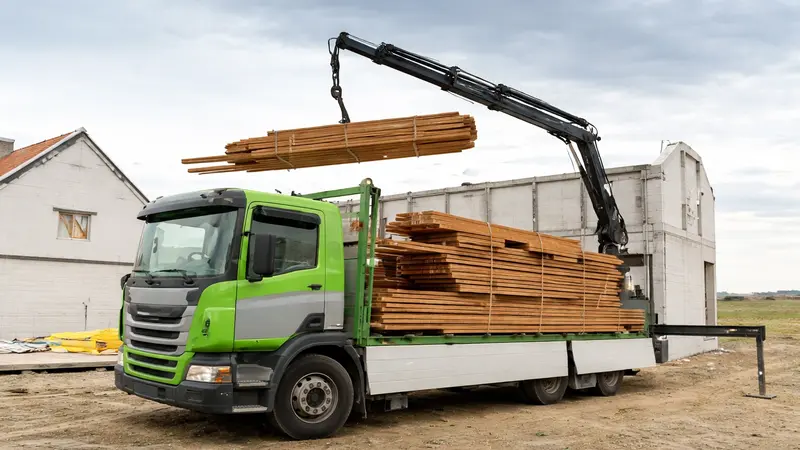
For businesses involved in construction, logistics, or industrial operations, selecting the right crane can have a significant impact on efficiency, safety, and overall productivity. A vehicle loading crane provides a versatile solution for lifting and transporting heavy materials; however, with various types, capacities, and features available, selecting the right one requires careful consideration.
Understanding Vehicle Loading Cranes
A vehicle loading crane is a crane mounted on a truck or trailer that allows operators to lift and move heavy loads directly from the vehicle. These cranes are designed for flexibility, enabling easy transport between sites while providing the lifting power necessary for a wide range of applications. They are particularly useful for moving construction materials, machinery, and large containers without the need for additional lifting equipment.
Identifying Your Load Requirements
The first step in choosing a vehicle loading crane is understanding the type and weight of loads you need to lift. Factors to consider include:
- Maximum load capacityAverage weight of materials
- Frequency of lifting operationsSelecting a crane with appropriate lifting capabilities ensures efficiency, reduces the risk of accidents, and protects both equipment and personnel.
Considering Reach and Height
Reach and height requirements are critical when choosing a vehicle loading crane. Depending on your operational needs, you may require a crane that extends vertically, horizontally, or both. Telescopic booms provide adjustable reach for tasks that demand precision, while fixed booms are suitable for routine lifting within standard parameters.
Evaluating your typical job site conditions will help determine the ideal boom configuration.
Types of Vehicle Loading Cranes
Different types of vehicle loading cranes are available to suit specific needs:
- Knuckle Boom Cranes: Compact, versatile, and ideal for urban or tight spaces.Telescopic Cranes: Extendable booms suitable for reaching high or distant loads.
Loader Cranes: Commonly used in construction and logistics for medium to heavy lifting.
Hydraulic Cranes: Offer precise control and smooth operation for delicate or heavy items.
Choosing the right type ensures optimal performance and operational safety.
Safety and Compliance
Safety is paramount when operating a vehicle loading crane. Look for models with stabilizers, load limiters, and emergency stop features. Ensure operators are trained and certified according to Australian Work Health and Safety (WHS) standards. Regular maintenance and inspections are essential to prevent accidents and extend the crane’s lifespan.
Assessing Mobility and Installation
Consider how frequently the crane will be moved between sites and the type of vehicle it will be mounted on. Some cranes are better suited to light trucks for frequent transport, while others are designed for heavier vehicles or semi-trailers for industrial-scale operations. Easy installation and setup reduce downtime and improve overall workflow.
Maximising Efficiency
To get the most from a vehicle loading crane, plan lifting operations in advance, select the correct crane size and type for each job, and ensure all operators are familiar with the equipment. Matching the crane to your specific operational needs can save time, reduce labour costs, and increase safety on-site.
Conclusion
Choosing the right vehicle loading crane requires evaluating your load requirements, site conditions, and operational demands. By considering lifting capacity, reach, type of crane, and safety features, businesses can make informed decisions that enhance efficiency, reduce risks, and deliver long-term value. Investing in the right crane ensures smoother operations and a safer, more productive work environment. For more information, visit our site.